Ribanes Co., Ltd., in response to an assignment from the city of Sendai, is promoting the “Sendai-Tohoku Expansion Program (STEP)” which supports startups from Sendai and Tohoku to tackle global challenges.
As part of this initiative, we are holding the Global Business Seminar 2026 for startups aiming to expand overseas from Sendai and Tohoku, as well as regional companies seeking new business opportunities.
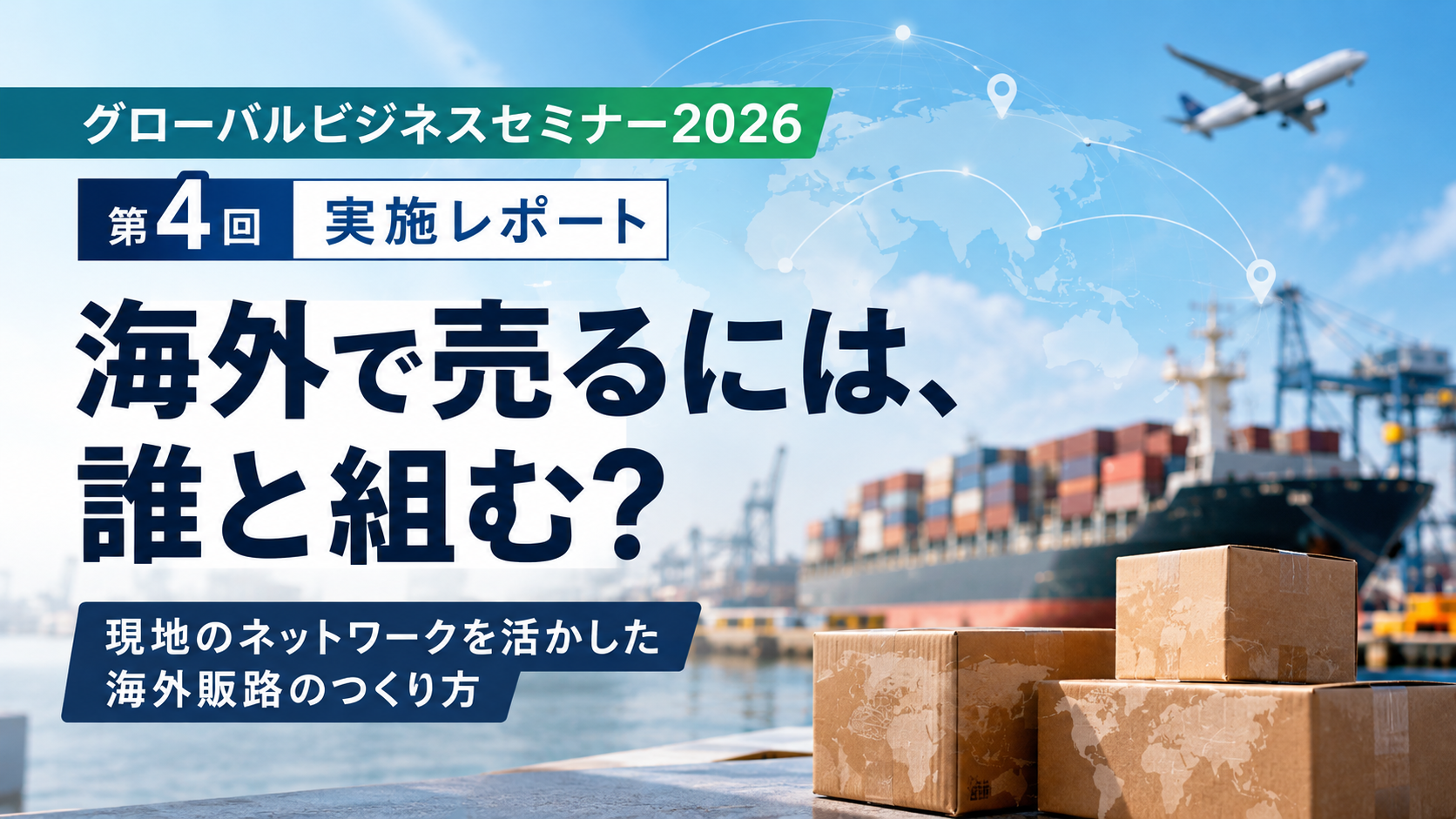
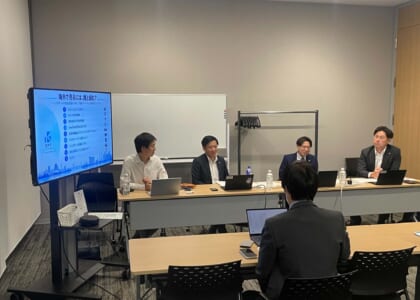
On Thursday, October 8, 2026, the 4th "How to Partner Up to Sell Abroad?" event was held.
Seminar Outline
Global Business Seminar 2026, 4th Overview
Date and time: Thursday, October 8, 2026, 16:30-18:00
Format of the event: On-site and online
Theme: Who should you partner with to sell abroad?
Organized by: Sendai City
Operated by: LIVERNESS Co.
Speakers:
Mr. Sato Shotaro, Overseas and Trade Promotion Division, Kamei Co., Ltd.
Kameyama Co., Ltd., New Business Development Department, Mr. Yukinori Takahashi
Moderator:
Kamai Corporation New Business Development Department, Mr. Kosuke Masutani
Who to partner with to sell abroad
When selling products overseas, how do you find local customers and how do you deliver the products? There are also many challenges that differ from selling domestically, such as logistics, trade customs, and collection of payment. In the fourth installment, we interviewed Kameyama Co., Ltd., which is headquartered in Sendai and operates a wide range of businesses both domestically and internationally, about overseas sales and distribution practices.
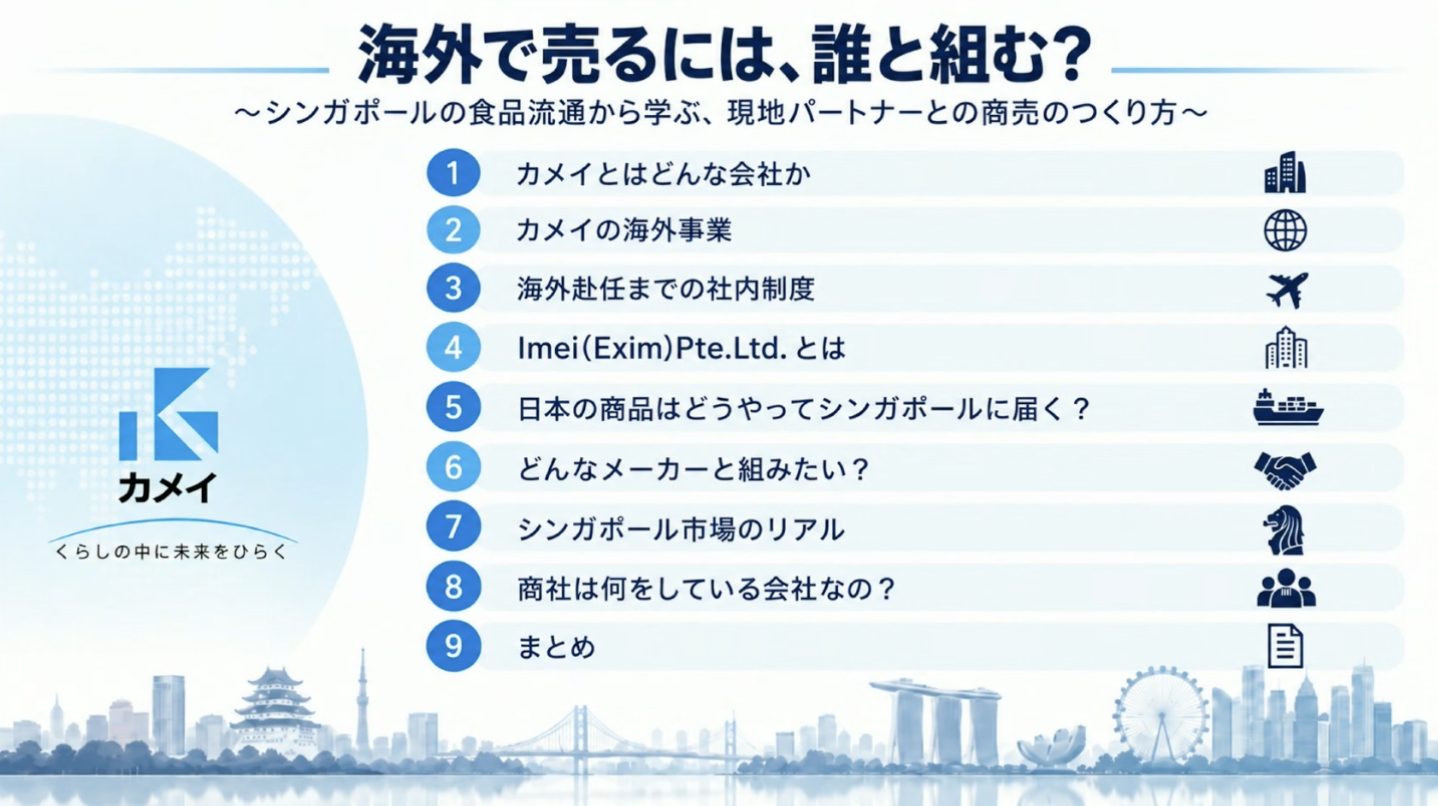
Kamey has diversified businesses in energy, food, construction, and automobiles, and has been operating overseas for many years. In Singapore, it has established relationships with local restaurants and retailers through the import and wholesale of Japanese ingredients, and also operates supermarkets in the United States.
In this occasion, based on this experience in overseas business, we discussed specific examples, including the roles played by trading companies and the measures to be taken to sell products locally, as well as the points to be considered when conducting overseas transactions.
⸻ 1. Utilize the network of trading companies to deliver to overseas markets
When expanding overseas, various measures are required, ranging from developing sales channels in the local market to handling transportation, storage, delivery, and collection of payment. While it takes time and costs to manage all these tasks in-house, leveraging the logistics network and sales network of trading companies can help reduce the burden of overseas expansion.
Using the example of the food distribution business in Singapore, the role played by trading companies was introduced. By transporting multiple manufacturers’ products together within Japan, even if individual manufacturers’ exports are low, it is possible to deliver goods efficiently and effectively to overseas markets. Additionally, utilizing the warehouses, distribution networks, and business relationships with restaurants and retailers owned by local group companies is a major advantage.
Furthermore, the mechanism for manufacturers to mitigate risks associated with exchange rate fluctuations and overseas transactions, such as domestic transactions in yen, was also introduced.
Before establishing a local presence overseas or developing a sales channel from scratch, we partner with trading companies that already operate in the local market. In particular, in the early stages of overseas expansion, utilizing the functions and networks of trading companies becomes an effective option.
⸻ 2. Products that can be sold locally should be considered locally.
Products that are popular in Japan may not necessarily sell well overseas. Different food cultures and lifestyles require different flavors, sizes, prices, and usage methods. We received case studies on how to adapt to different product specifications in Japan and overseas, and on creating products tailored to local needs.
In addition to placing products on the sales network of trading companies, the importance of manufacturers themselves visiting the local market was also introduced. In fact, there are cases where the sales representatives have continuously visited Singapore and met with restaurant owners to expand their sales channels.
Knowing what local customers are looking for and changing products or sales methods as necessary. It is necessary for trading companies and manufacturers to leverage their respective strengths and work together to open up markets.
⸻ 3. In international transactions, we consider everything from after the sale.
To continue operating overseas, you need a system that not only sells products but also maintains stable transactions. In this seminar, we heard case studies about Singapore’s high prices and labor costs, as well as the challenges of hiring and logistics in the local market, and also about credit management with our trading partners.
In particular, being able to ensure the collection of payment after selling a product is an essential aspect of overseas trading. At Kamei, we manage the risks associated with transactions by leveraging our partner’s credit information and local networks.
When expanding into overseas markets, we often focus on securing sales partners, but it is essential to understand the local business customs and trading conditions and choose a partner with whom we can work long-term.
In this seminar, we learned that while leveraging the network of trading companies can lower the hurdles to overseas sales, manufacturers themselves also need to engage with local customers and innovate their products and sales methods.
Further information to come
At the Global Business Seminar 2026, we will continue to cover various topics related to overseas expansion.
Next time, we plan to hold a seminar introducing our experience and current situation in business development in Southeast Asia.
At the Global Business Seminar, we welcome the participation of researchers, start-ups, regional companies, financial institutions, and government officials, among others, who are interested in expanding their business overseas.
