Ribanes Co., Ltd., in response to an assignment from the city of Sendai, is promoting the “Sendai-Tohoku Expansion Program (STEP)” which supports startups from Sendai and Tohoku to tackle global challenges.
As part of this initiative, we are holding the Global Business Seminar 2026 from August to target startups aiming to expand overseas from Sendai and Tohoku and local companies seeking new business opportunities.
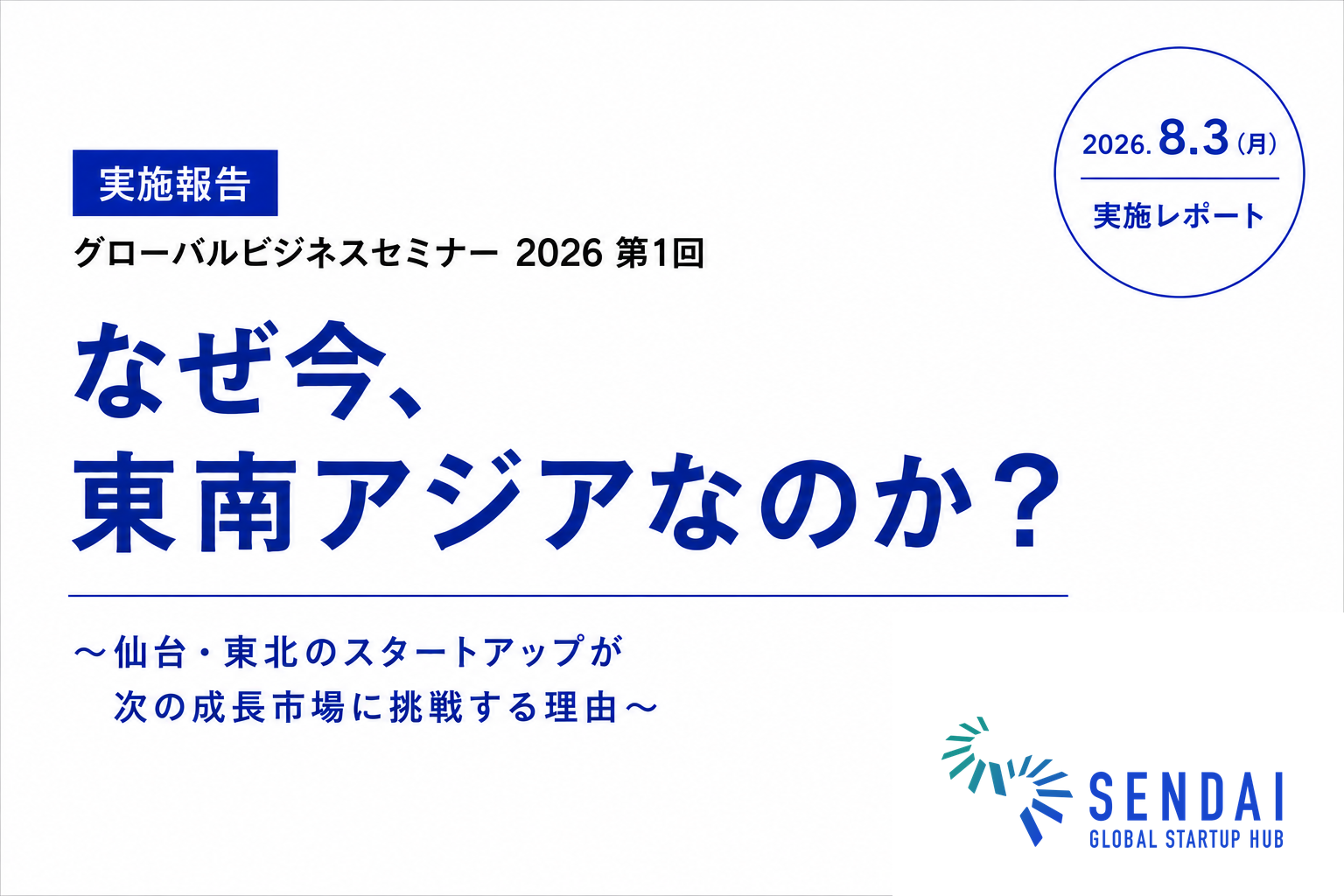
This time, on Monday, August 3, 2026, the first “Why Southeast Asia? — Why Startups in Sendai and Tohoku are Challenging the Next Growth Market” event was held.
Seminar Outline
+ + Global Business Seminar 2026, 1st Session + +
Date and time: August 3, 2026 (Mon) 15:00 – 16:30
Venue: Hotel Metropolitan Sendai Fuj (3rd floor)
Theme: Why Southeast Asia now? — Why Sendai and Tohoku-based startups are challenging the next growth market —
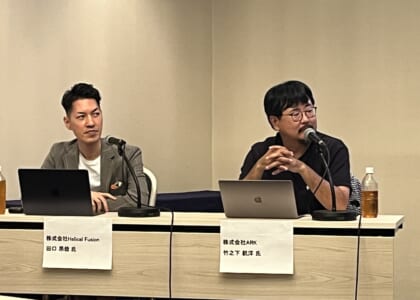
Speakers:
Mr. Takahito Tanaka, Co-Founder and Representative Director and CEO of Helical Fusion Co., Ltd.
Mr. Takahisa Takasuda, Director and CTO of ARK Inc.
Representative Director and Group CEO of LIBANESS Co., Ltd.
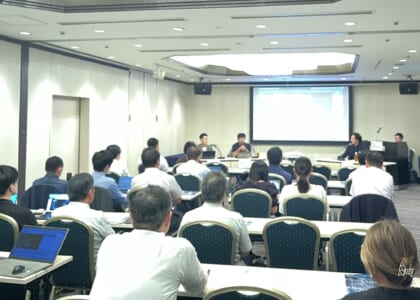
Seminar Report
Focusing on overseas expansion more closely
When you start thinking about expanding overseas, your first step is to conduct market research and develop a business plan. As a result, many companies are not only focused on perfecting their products and services but also consider going overseas only after thoroughly preparing. In this seminar, we invited Helical Fusion, a company engaged in fusion energy, and ARK, a company engaged in land-based aquaculture, to discuss their experiences overseas.
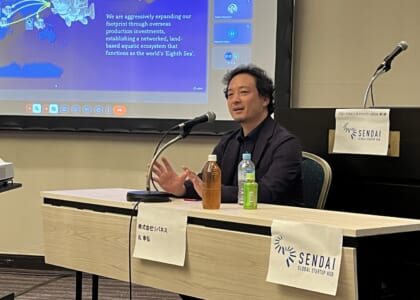
At the beginning, the three distances presented by Maru from Libanesse were “distance traveled,” “time distance,” and “ideological distance.” Although Tokyo and Sendai are physically far apart, a Shinkansen takes about an hour and a half. Depending on how you perceive distance, the sense of distance changes. Among the keywords that became the focus of this discussion, “ideological distance” is not just a psychological distance. It is about what you want to achieve with new technology and what challenges you want to solve. The distance between you and your partner also changes depending on your understanding of technology and the future you aim for. Even if you are physically far apart, if your partner understands your company’s technology and the future you aim for, you can become a partner to build a business together.
⸻1. Don’t wait until it’s finished to establish contact with overseas partners.
In projects that take time from research and development to social implementation, such as deep tech, there is no need to wait for the product to be completed before starting to build relationships with overseas partners.
From Mr. Takahata of Helical Fusion, he introduced his experience of visiting various countries and regions and engaging with local stakeholders. Even in regions where fusion energy is not yet widely discussed, they convey the technology and future vision from an early stage. Maru described this movement as “reducing ideological distance.”
ARK has also been looking abroad from the very beginning of its founding, seeking to identify where their technology is needed in different regions. From the very beginning of its business development, it has maintained contact with overseas partners, incorporating the feedback it receives from the local market into its business development efforts.
⸻2. Look for a place that suits your company, not just the size of the market.
Just because a country or market has a large population or market size, that doesn’t necessarily mean that your company will have an easy time competing there.
From Mr. Takeyoshi of ARK, he shared his experience of reviewing the target markets and fish species as they proceed with their business. As regions change, the food culture and food situation also change. Even if a region doesn’t become a major market, there may still be high demand in other countries. Also, the roles required of startups vary depending on regions where many companies are already competing and those that need new technologies.
Rather than asking “where is the largest market?”, the question should be “where is the place where our technology is needed?”. The concept of ideological distance serves as a guiding principle when considering where to expand our business.
⸻3. Go to the field and talk to people to change your hypothesis
One of the recurring themes in this discussion was the idea of “going to the field.”
Although there is a lot of information available from market data, when talking about our own technology, it’s not always clear how the other party will respond or what challenges they may have until we actually meet and talk.
Both companies have been thinking about their business while meeting people and observing the local situation overseas, ensuring a local response. Rather than sticking to initial hypotheses, we talk to the local people and change things if necessary. Once we find someone who can understand our ideas, we build relationships from there. From these efforts, we can see regions and partners that are closer in thought than our own.
At the end of the seminar, there was also a discussion about the importance of not overthinking the distinction between "domestic" and "overseas." How can we address the challenges we face in the world and work together with anyone? Instead of treating overseas expansion as something special, we should first go there and talk to the people there. The first time was an opportunity to reduce the distance from overseas by taking that first step.
Further information to come
The next Global Business Seminar 2026 will be held on Monday, September 7, 2026.
In the second session, we will discuss how financial institutions and investors view overseas expansion, with the theme of “How can we leverage overseas expansion for business growth?”
People from companies that have not been selected for the Sendai-Tohoku Expansion Program (STEP) are also welcome to attend the global business seminar. We are looking forward to the participation of researchers, start-ups, local companies, financial institutions, and government officials who are interested in expanding their business overseas.
