Southeast Asia is a young market with a total population of 670 million and an average age of 29. Behind the rapid economic growth, the region faces "deep issues" such as plastic pollution, biodiversity loss, agricultural waste, and immature infrastructure.
This assignment,Companies in Hiroshima Prefecture and startups in Southeast Asia join forces to solveThis project aims to achieve this goal.
→ Details:Official page
Program Overview
Commissioned by Hiroshima Prefecture, RIVANES supported the creation of collaborative businesses utilizing corporate assets.
A total of three workshops were held from June to September, where participating companies learned about local issues and explored how their technologies could be used to solve social problems.
Flow of the event
-
1st Session (6/29)Inventory your company's strengths (assets)
-
2nd Session (7/4)Learning about issues in Southeast Asia and envisioning a plan for collaboration
-
3rd (Sept. 5)Business plan presentations by each company
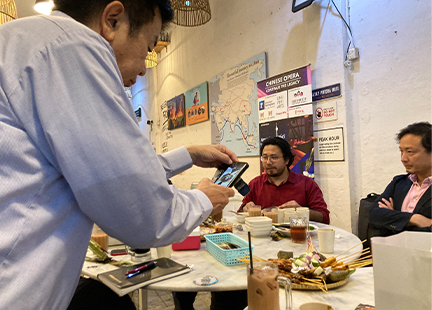
Six companies then proceeded to individual lectures, and finallyThree companies selected for demonstration project designThe selected companies were selected for the project. The selected companies visited Southeast Asia with the accompaniment and support of RIVANES, and had a series of dialogues with partner companies and government officials.
→ Related Report:Site Visits
Results and future development
In March 2024, a results briefing was held, where three companies presented their local challenges and demonstrated the potential of problem-solving businesses.
This initiative is a new model case for creating new businesses in the environmental and energy fields by combining the "technologies of local companies" with the "onsite capabilities of overseas startups.
→ Click here to read the article on the results briefing:Implementation Report (2024.3.25)
The Role of Libanes
Since 2014, Liberace has been discovering and nurturing technology startups in Southeast Asia, and has been promoting "research and business co-creation" to solve social issues.
By combining the enthusiasm of local entrepreneurs with the technology and knowledge of Hiroshima companies,A model for sustainable, regionally initiated international collaborationThe company has achieved the following
