Global Bridge Conference
News
For Corporates
Japan
Southeast Asia
For Ministries and Governments
Tackling the global market is not just the privilege of large corporations. No matter how superior the technology and strategy, the real local challenges, unique business customs, and legal and regulatory barriers can easily shatter the theoretical theories. The venture companies, which are taking on the world in the different fields of robotics and materials recycling, and the Ministry of Economy, Trade, and Industry (METI) and the city of Sendai, which are supporting them, tell not only beautiful stories of success from their respective perspectives. Unexpected obstacles, dramatic local pivots, and new opportunities for victory created by "co-creation" rather than "competition" - these are just a few of the stories that will be told from the perspectives of the two parties. We will present fresh, practical knowledge to accelerate overseas business development from tomorrow, and the passionate discussions that support it.
Speakers:
Mr. Shoji Unno, Assistant Director, Trade Promotion Division, Trade Policy Bureau, Ministry of Economy, Trade and Industry
Mr. Ken Matsui, CEO, UGO Corporation
Mr. Hiroshi Kamakura, Startup Support Division, Innovation Promotion Department, Sendai City Economic Affairs Bureau
Mr. Shohei Ashihara, Co-founder, amu Co.
Moderator:
Takumi Kando, Research and Development Division, Liverness, Inc.
__________________________________________________________
■Declaration of field-oriented approach to "Achieve results in six months.
Takumi Kando, Liberace Ladies and gentlemen, please accept my best regards. In the Venture Pitch just now, we had a total of 13 companies give enthusiastic presentations. We at LIVERNESS have received a Sendai City project, and together with other venture companies that have been selected by the Ministry of Economy, Trade and Industry for the "Global South Future-oriented Co-creation Subsidy Project" (hereinafter referred to as "GS Subsidy Project"), we are seriously working toward overseas expansion.
As mentioned briefly at the beginning of this article, the policy of LIBANES is clear. We will achieve results in six months. This is our policy. I am sure that all of you who have pitched in today will see results by the end of the fiscal year. Yes, we will. The theme of this session is "Immediate action! Practitioners who care about results. I would like to talk about how we can achieve results in a short period of time.
You may have been distracted by the desire to speak at the poster exchange as soon as you heard the pitch, but it is only after you hear the vivid stories that will be told in the next 30 minutes that you will be able to have a more concrete conversation at the next exchange, and the quality of your business meeting will change. We hope you will take home the "seeds" of this experience.
Before I begin, let me briefly introduce myself. My name is Jinto of RIVANES. Like RIVANES, I am also a graduate researcher, and I joined the company after completing my PhD and working as a teacher. My mission is "to create an organization that implements science and technology across countries. If technology is used only in certain countries, it is impossible to solve global issues, isn't it? I am working to implement technology in places beyond countries and regulations.
In fact, I am a crazy field person. I go to the field with companies and researchers to conduct demonstrations and create systems, and in the year 2025 alone, I roughly counted 14-5 MOUs and releases that were signed through my direct involvement. At a rate of at least one per month, some kind of agreement is being formed somewhere in the world.
Today's panelists are representatives from companies that have been adopted for various projects. Mr. Ashihara of amu, which has been adopted by the Sendai City project, and his supporter, Mr. Kamakura of Sendai City. Then there are Mr. Matsui of ugo, who has been with us since last year's METI project and is utilizing the GS subsidy project this year, and Mr. Unno of METI. We would like to discuss in depth both the vivid episodes of the practitioners and the viewpoints of the supporters, as well as the system and framework.
__________________________________________________________
■The Challenge of a Seed Venture Aiming for the World from the Region through Fishing Net Recycling
lupine Let's begin by introducing ourselves and talking about our respective efforts in about three minutes. Let's start with Mr. Ashihara of amu.
Mr. Shohei Ashihara, amu My name is Ashihara from AMU Corporation. Pleased to meet you. I was born in Saga Prefecture, went to university in Ishikawa Prefecture, and after graduation worked on a remote island called Ama-cho in Shimane Prefecture before moving to Kesennuma. I am really a person who has moved from one region to another. 2023, I founded amu together with my friends.
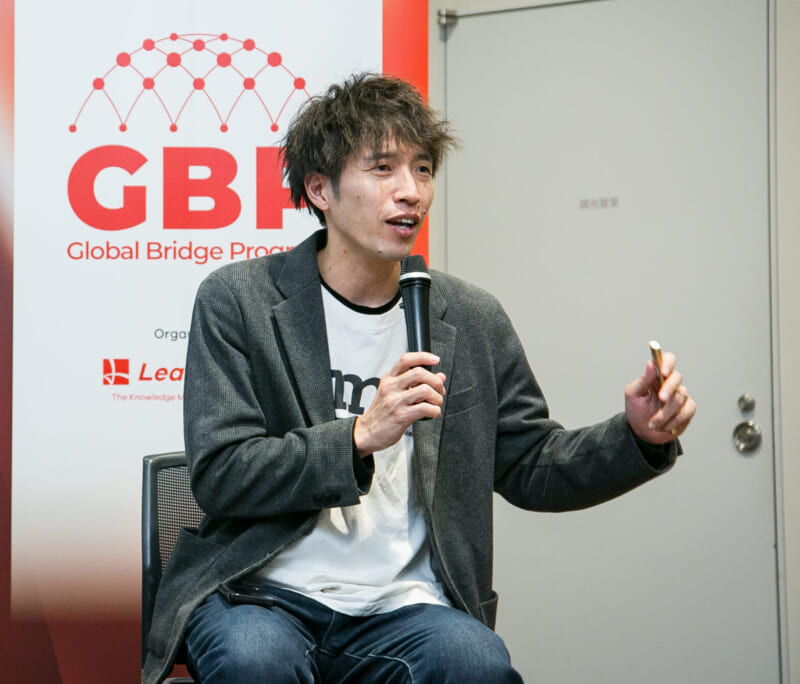
Mr. Shohei Ashihara (Co-founder, amu Co., Ltd.)
We are in the business of collecting and recycling "fishing nets" used by fishermen throughout Japan. We collect mainly nylon fishing nets in particular and use a method called "chemical recycling. This is a technology that returns the nylon back to its original molecular structure, which makes it possible to produce nylon of the same quality as virgin (new) nylon. The production of materials equivalent to virgin material means that the nylon can be reused to make clothing, carpets, and other products that you wear.
Since we track the entire process from collection to recycling, we can tell the story behind the product, such as "This was made from a net used to catch tuna in Miyagi Prefecture" or "This was processed in what town. We are challenging ourselves to make people interested in the background of the product itself, rather than simply saying that it is a recycled product that is good for the environment.
These "fishing nets", however, are a big part of the global ocean plastic problem. Moreover, it is said that about 591 TP3T or 60% of ocean plastic originates from Southeast Asia, so we thought we had to go to Southeast Asia at some point. However, even if you look on the Internet, you will find statistical data such as "where the catch is high," but you will not get any real local information. On the other hand, looking around the world, players in the fishing net recycling business are gradually emerging, but players in Asia have not yet established a firm position. Seeing a chance to win there, we decided to expand into Southeast Asia.
I traveled to Malaysia three times in the past two months of October and November. The most important thing I gained from this trip was that I really appreciated the support provided by LIVERNESS. We are still in what is called the seed stage, but they worked with us to develop a business hypothesis, and then worked with us to formulate a strategy, saying, "Well, maybe we should talk with them about this," or "Let's go with this strategy next time.
We were introduced to government agencies and researchers there, and were able to obtain primary information such as "the fishing industry is thriving in this area," and were also introduced to a company that actually recycles fishing nets in the area. Also, when we had high school students from Southeast Asia touch our products at a local event, their reactions were extremely positive. They said, "Wow, are these really made from fishing nets? Where can I buy it? It was a site where we were able to strongly realize the potential of the product.
Kando: The reaction of those high school students was great, wasn't it? In Japan, most of the reactions would be something like, "Wow, that's great," but over there, they would say, "Is this really a T-shirt? Are these really T-shirts or sunglasses? But over there, the reaction was very different. There may be a difference in quality from the materials they usually hold in their hands, but the amount of enthusiasm was amazing. I had a feeling that this was where the connection with the local community would be born.
__________________________________________________________
■Sendai City's vision of becoming a global startup city
lupineNext, we have Mr. Kamakura from Sendai City. amu and the others who have just pitched are all working as Sendai City projects. Please introduce yourselves and tell us what you are doing from a supporter's point of view.
Mr. Hiroshi Kamakura, Sendai CityMy name is Kamakura and I work for Sendai City Hall. I am currently assigned to the Startup Support Division, but I have a somewhat unusual background for a government employee, having previously worked for a private trading company for a long time. I joined the city in April 2023 and was assigned to my current section.
This fiscal year, we launched the "Sendai Global Startup Hub" and entrusted the work to RIVANES to provide accompanying support. The city of Sendai is working on two pillars: "creation and nurturing of innovative university-originated technologies (deep tech)" and "support for startups that solve social issues (social impact). In particular, Tohoku University has been very active recently, and we are putting a lot of effort into supporting deep tech.
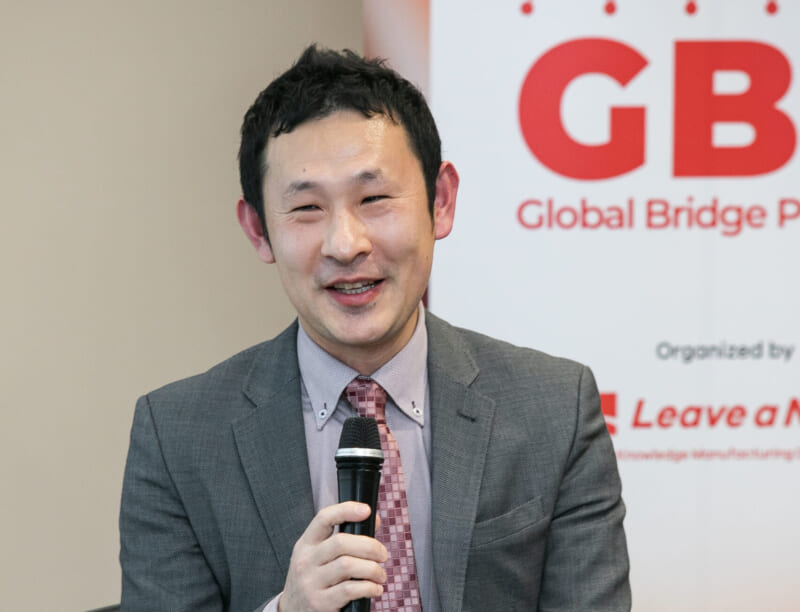
Mr. Hiroshi Kamakura (Innovation Promotion Department, Sendai City Economic Affairs Bureau)
The city of Sendai, which has focused on supporting startups since the early days immediately after the earthquake, opened the Sendai Startup Studio in March of this year in response to a desire to consolidate support bases as startup support gains momentum throughout the Tohoku region. Equipped with a co-working space and event space, we are creating a space where startups can take root. In addition, following our selection as a "Global Hub City" by the Cabinet Office, we are accelerating our support for overseas expansion based here.
This year, for the first time, we held a global conference called "DATERISE!", which was attended by more than 2,000 people from Japan and abroad. In this context, we are implementing the "Sendai-Tohoku Expansion Program STEP" to help Sendai/Tohoku companies go overseas, and together with RIVANES, we are providing accompaniment and support for the overseas expansion of everyone who made a pitch today. We would like to accelerate global expansion in cooperation not only with the government, but also with industry, academia, government, and academia.
lupineThank you very much. I understand that you not only send out companies, but also support them with seminars and other activities at your locations.
KamakuraYes, we had Matsui-san on the stage as well. The first session with Mr. Maru, the representative of LIVERNESS, was very inspiring for the entrepreneurs in Tohoku.
lupineThe content inside was pay-per-view grade content, wasn't it? As for RIVANES, by working together in this way, we have been able to gather ventures with know-how that have already been active overseas. The environment in which we can immediately call on such "seniors" is itself becoming an ecosystem in Sendai City.
__________________________________________________________
■Asian strategy to make robot technology an export industry and national support
lupine Now, next, Mr. Matsui of UGO, please.
ugo Mr. Ken Matsui My name is Matsui, President of UGO Corporation. We are developing "Business DX Robots". We manufacture mobile robots that work in familiar environments at our own domestic factory.
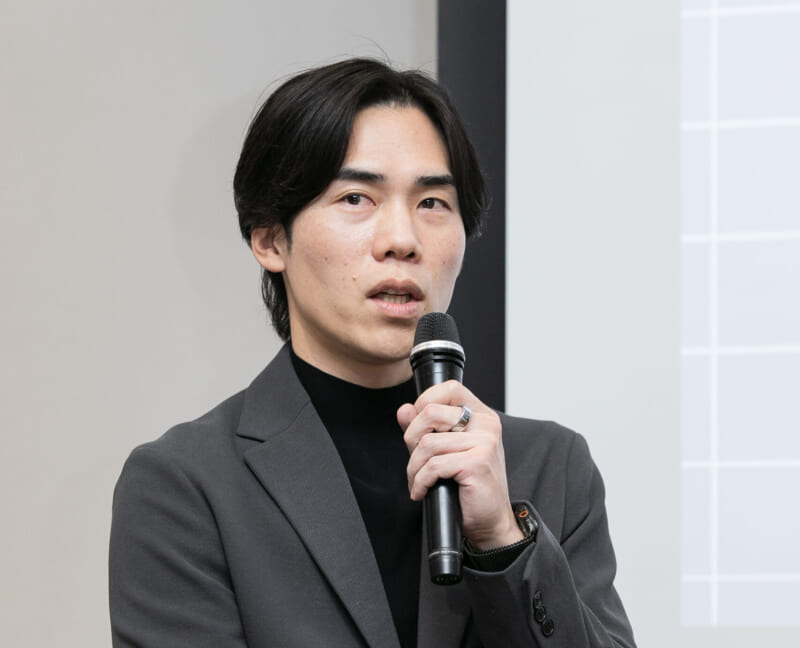
Mr. Ken Matsui (CEO and Representative Director, ugo Co.)
There are two models. One is the "humanoid robot. This is mainly used in security services. They work twice or three times as long as humans, or 20 hours a day, in offices, commercial facilities, airports, etc., and work with AI to provide guidance and detect abnormalities.
The other is the inspection robot "ugo mini. The greatest feature of this robot is the "chonmage"-like pole on top of its head, which can reach 180 cm when extended. A camera and sensors are attached to the tip of this pole, which sees analog meters and pipes in high places, records the data on a daily basis, and notifies the site if there are any abnormalities. This enables automated inspections of social infrastructure and remote confirmation in the event of a disaster.
In expanding overseas this time, we have established operations in Singapore, Malaysia, and Taiwan. We chose Asia over Europe and the U.S. because we believe it is extremely important for Japanese companies to establish partnerships from an early stage in Asian markets, where industry is expected to grow in the future.
We are working in line with the government's robotics and AI strategy, which calls for more widespread use and standardization of robots. We do not want to close this project in Japan alone, but rather to take the know-how we have developed in Japan, a country with advanced issues such as "declining birthrate and aging population," and deploy it overseas as an "export industry. We believe this is Japan's winning strategy.
Especially in Asia, where DX and robot utilization are being promoted under government initiatives, it is important to quickly create relationships and enter the market. With the support of RIVERNESS, we have been selected for a GS subsidy project by the Ministry of Economy, Trade and Industry (METI) and are working to create a market.
lupineThank you very much. We will hear more about it later. Lastly, Mr. Unno from the Ministry of Economy, Trade and Industry. Could you give us some background on how you view the term "Global South" as a nation?
Mr. Shoji Unno, Ministry of Economy, Trade and IndustryMy name is Unno, Trade Promotion Division, Ministry of Economy, Trade and Industry. I will be speaking on the topic of "Co-creation with the Global South, which is making great strides. In my career, I have worked on the drafting of the Declaration on Partnership Building and the deregulation of the ratio of overseas expansion of LPS (Limited Partnership for Investment) from the perspective of promoting SMEs and start-ups, but this time, I would like to talk about the GS subsidy project in particular.
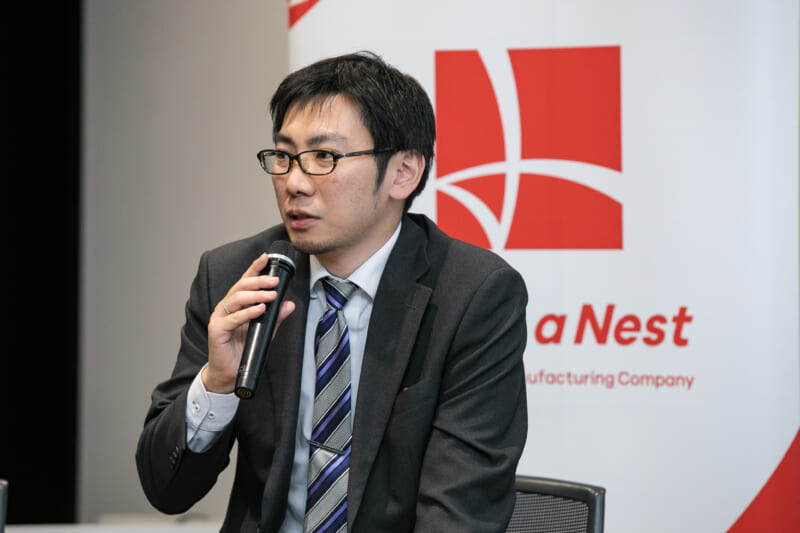
Mr. Shoji Unno (Trade Promotion Division, Trade Policy Bureau, METI)
The first important keyword is not "competition" but "co-creation. Many countries, including China, Europe, and the U.S., are attacking the Global South market, but the direction that Japan can take is not to "impose" but to "work together" to solve local problems.
Why the Global South now? There are three main reasons. One is economic growth. It has very strong market potential. The second is economic security. In the supply chain for semiconductors and critical minerals, we need to correct the bias caused by dependence on certain countries and to strengthen our supply sources. Third is the key to shaping the international order. As they are gaining an increasing voice at the United Nations and elsewhere, the question is how much Japan has contributed so far. News of recent international conferences shows that there are countries that support Japan because of the support Japan has given them. This is precisely the moment when the trust that Japan has built up comes into play.
These subsidies are quite large in scale, including large-scale demonstrations (up to 4 billion yen), small-scale demonstrations (up to 500 million yen), and feasibility studies (up to 100 million yen). Rather than simply "go overseas," we are strategically investing in areas where Japan has a winning edge, such as GX (Green Transformation), DX, and economic security, which are in line with national policy. For example, we are supporting projects of national significance, such as ammonia-fired gas turbines in Malaysia, a blockchain-based financial system in Palau, and semiconductor back-end processing in Vietnam.
By doing business locally, Japanese companies contribute to solving local issues and build win-win relationships. We are convinced that such projects will build diplomatic bridges and enhance Japan's presence in the region.
lupineThank you very much. After listening to Mr. Unno's talk, I felt that it is very compatible with the Rivanes approach. For example, when I talk to Malaysian managers in their 40s or so, they grew up watching Prime Minister Mahathir's "Look East Policy" as children. This is a "co-creation" attitude to solve local issues together at a time when they have respect for Japan. This is the key to success.
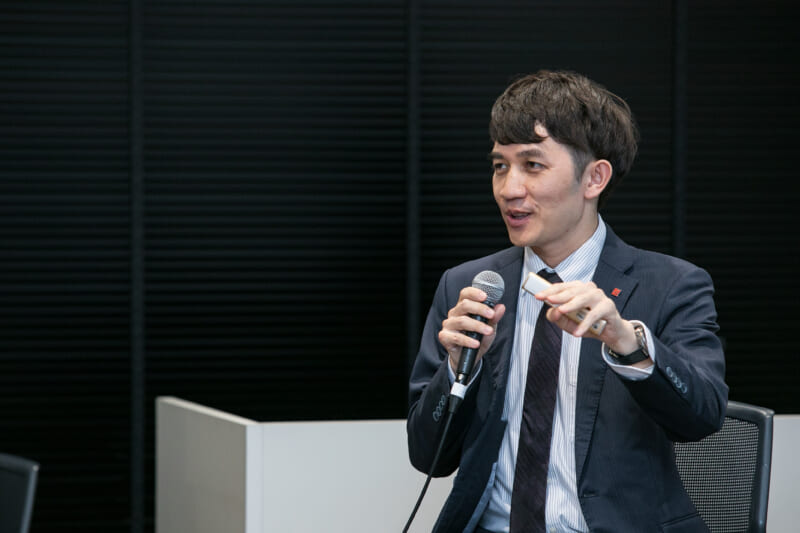
Takumi Kando (Research and Development Division, Liverness Corporation)
__________________________________________________________
■Is it too early for overseas expansion an assumption? Seed period vs. series A
lupineFrom here, I would like to hear a few graphic stories. In particular, I would like to ask Mr. Ashihara of amu and Mr. Matsui of ugo, "At what point should we consider overseas expansion?" They have been in business for different lengths of time. The number of years since your company was founded is different, but looking back, how do you feel about it?
reed bedThis is a difficult question. To be honest, when I applied for the Sendai City project this time, another member said, "You should also look at Southeast Asia," and after I applied and was accepted, it was like, "Ashihara, go ahead," (laughs). (Laughs.) As for myself, I thought, "It's still too early.
The domestic business concept itself was still in its seed stage and not yet stable. However, our thinking changed when we actually went to the area with Mr. Rivanes and worked with him to come up with a business hypothesis. Our activities there helped us to solidify the core of our business, and we now feel that "surprisingly, we can do well even in the seed stage. There were many aspects that we could feed back to our strategy in Japan while running in the field.
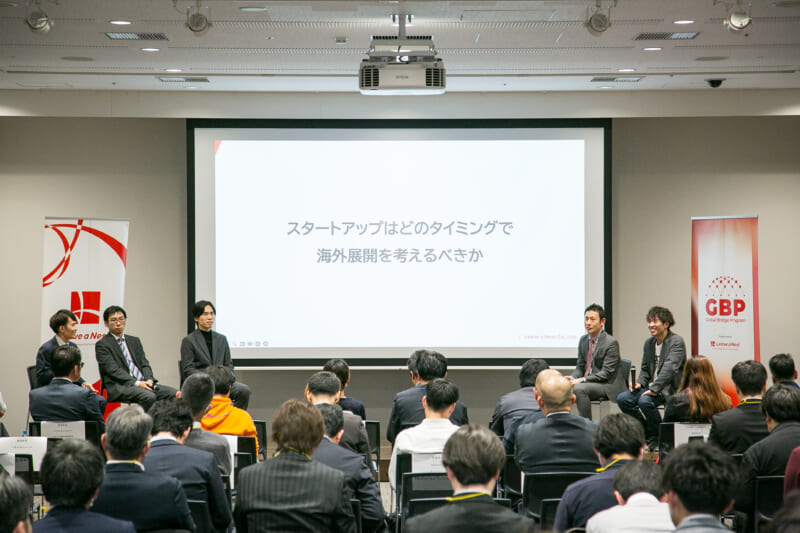
pine wellI am clear: "You should go as soon as the product takes some shape. In startups, this is around Series A or Pre-A. The reason for this is that when you go overseas, you can talk quickly. When there is an actual product, they are more likely to say, "Well, I want to try it right away," or "How much is this? and "How much is this? On the other hand, if you don't have the product, you are only talking about catalogs, which is a lost opportunity.
To answer the question, "Should we expand overseas?", the answer is obvious if we consider the size of the market. It is said that the combined market of the U.S., Europe, and Asia is approximately eight times larger than the Japanese market. Considering the effort required to conduct business in Japan alone and the effort required to conduct business overseas, the potential is overwhelmingly greater overseas. Therefore, my conclusion is that once a product is developed, it should go overseas.
lupineI see. If you have a product, you can improve it to suit the local market, so the earlier you start, the easier it is to adjust.
__________________________________________________________
Pivot and opportunity for "no way" seized at the site
lupineThe next question I want to ask is "initial hypothesis vs. reality". What were your thoughts before you went and how did you feel when you actually went? Tell us about the gaps and discoveries.
reed bedIn fact, the initial hypothesis was proposed halfway by Mr. Maru of LIBANES, who said, "If it's your business, this is what you should do! (laugh). (Laughs.) To tell the truth, I was skeptical and went with the idea that "if someone who knows the local area well says so, then it must be true.
Initially, we were thinking mainly of proposing the project as a CSR activity to a local Japanese company. However, when we actually started working on the project, a connection that we had not initially envisioned came up that might lead to an MOU with a local fishing net recycling company. Although "things did not go according to the original scenario," my realistic impression is that "as we moved forward, connections were formed in other ways, and from these connections, a path to essential business was opened up.
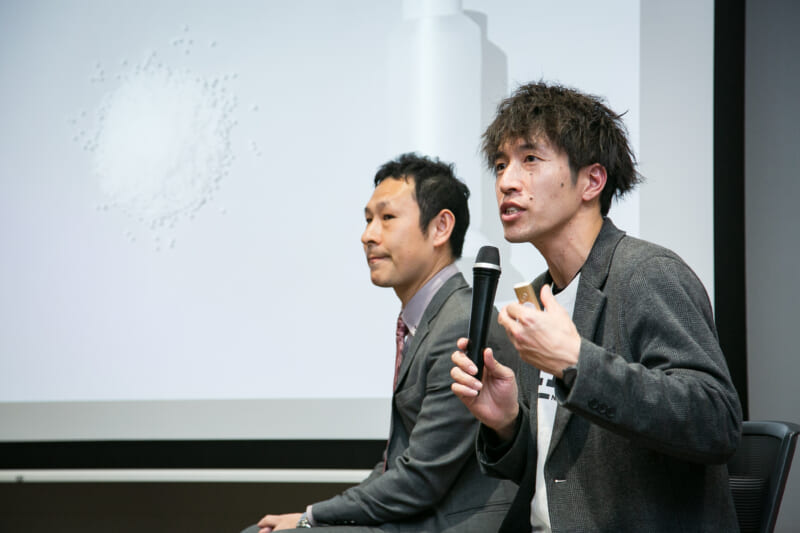
pine wellWe had a big gap too. We initially expanded to Singapore. Our hypothesis was that since prices and labor costs were high, there would be a high need for robots. However, when we actually went there, we found that what they were looking for was fixed equipment such as surveillance cameras and AI, rather than robots. I thought to myself, "Well, it's not robots that they're looking for.
Furthermore, I had hypothesized that there must be a need for data center inspections, but there is no more land in Singapore, and new data centers and power plants cannot be built. To my surprise, I heard that they were building them in neighboring Malaysia and drawing electricity from there. So I thought, "Well, Malaysia then! and I immediately headed to Johor Bahru, the neighboring country. When I went there, I found that a special economic zone was being developed at exactly the right time, and that there was a great deal of respect for Japan, partly due to the influence of the Look East policy of former Prime Minister Mahathir. I had a gut feeling that this was the place to be. If I had not gone there, I would not have been aware of the changing market structure and realistic business trends. Singapore is very focused on healthcare, and there is a need for the use of robots in hospitals.
__________________________________________________________
■Structures to encourage overseas expansion as envisioned by national and local governments
lupineI understand the importance of local pivots. Finally, as a supporter of these corporate moves, I would like to ask how you view them from a policy and institutional perspective. Mr. Kamakura, what do you think?
KamakuraFor the deep tech companies we support, the domestic market alone is not enough. We want them to consider overseas expansion at an early stage. It is important not just to tell them to go there, but how to get them there. We have been providing support for exhibiting at overseas trade shows for some time.
In addition to exhibiting this time, we are implementing measures to have experts such as RIVANES accompany us to conduct highly accurate matching. As a government agency, we would like to create an environment in which people can first go there and gain experience in the local market.
lupineIn fact, the word "matching" is almost a banned word within Liberace (laughs). (Laughs) Simply bringing people together is not enough to develop into a business. We want to commit ourselves to increasing the probability of it becoming a business. Mr. Unno, what about from the perspective of subsidies?
Maritime Affairs Department (under the ritsuryo system)First of all, we would like to encourage you to apply for the grants, because if your idea is a good one, we will adopt it. We expect to accept applications twice a year, but if you wait six months, the world will change. We encourage you to take up the challenge now.
However, there are cases of failure even if the project is adopted: "I didn't know the local regulations" or "I couldn't put something for demonstration". This is unfortunate. To avoid this, prior FS (and collaboration with local partners) is very important. Our GS subsidy project is currently being discussed in the Diet with a large budget request of 154.6 billion yen. As a country, we will do our utmost to support projects where Japanese technology is accepted locally and we can solve problems together.
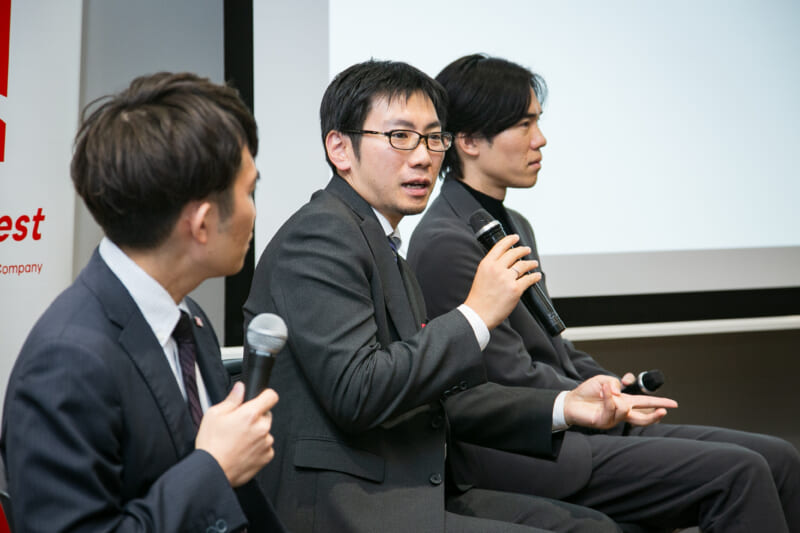
lupineThank you very much. One last thing. As mentioned in the previous pitch, one venture company went to Malaysia with RIVANES and happened to meet one company that came together with great speed. In fact, the other company was a company that had come to a seminar that RIVERNESS had held previously. Once I connected with them, I thought, "This is a good fit," and things progressed very quickly.
In this way, RIVANES itself enters the field as a player, turning encounters, both accidental and inevitable, into results. We hope that new chemical reactions will occur among the participants of this event.
Today's speakers proved that "practice" is the key to the next development. Thank you very much.